
Starlink Mounting for Marine and Aquaculture
Reliable Connectivity for Vessels and Marine Operations
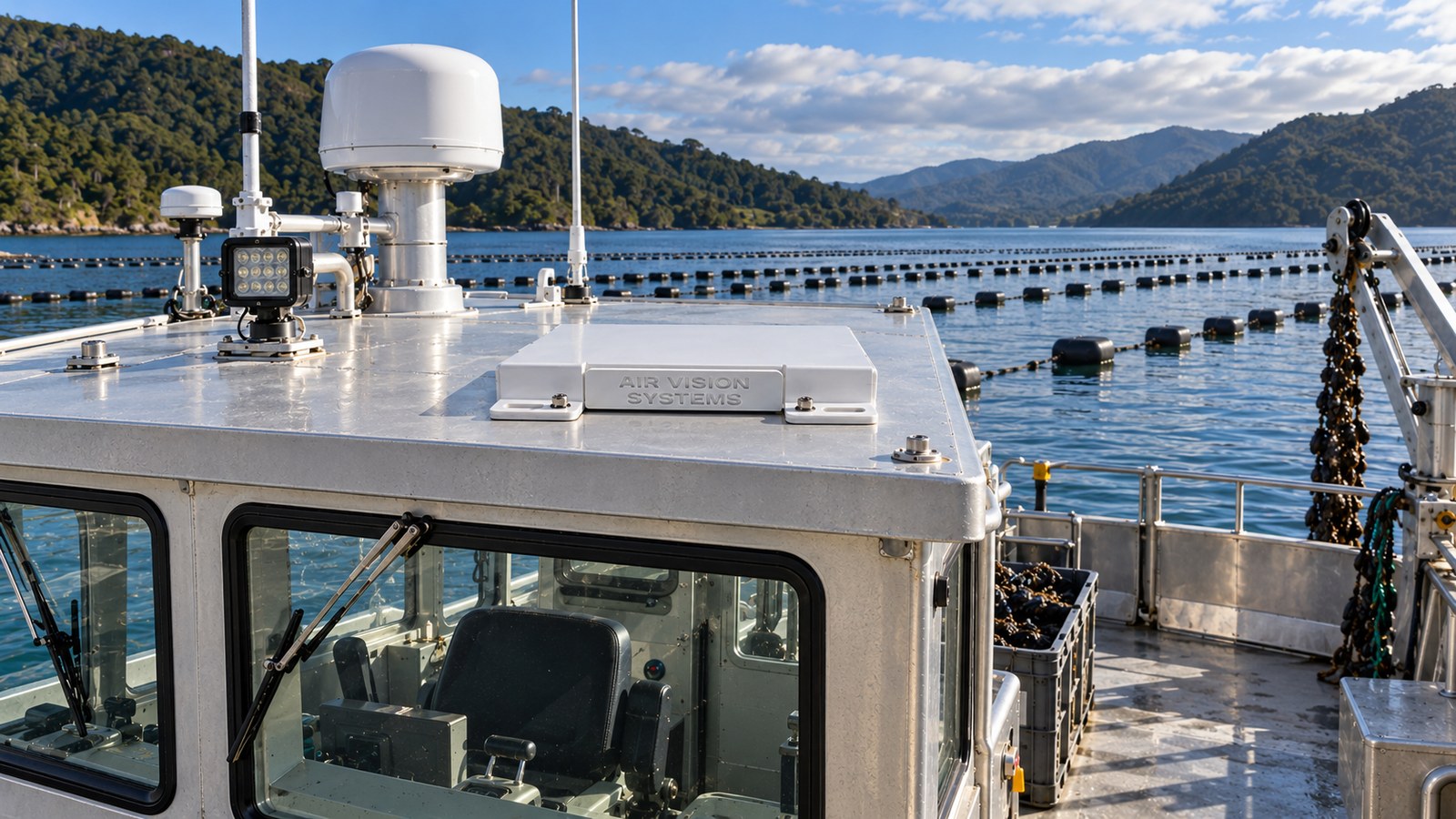
The Problem
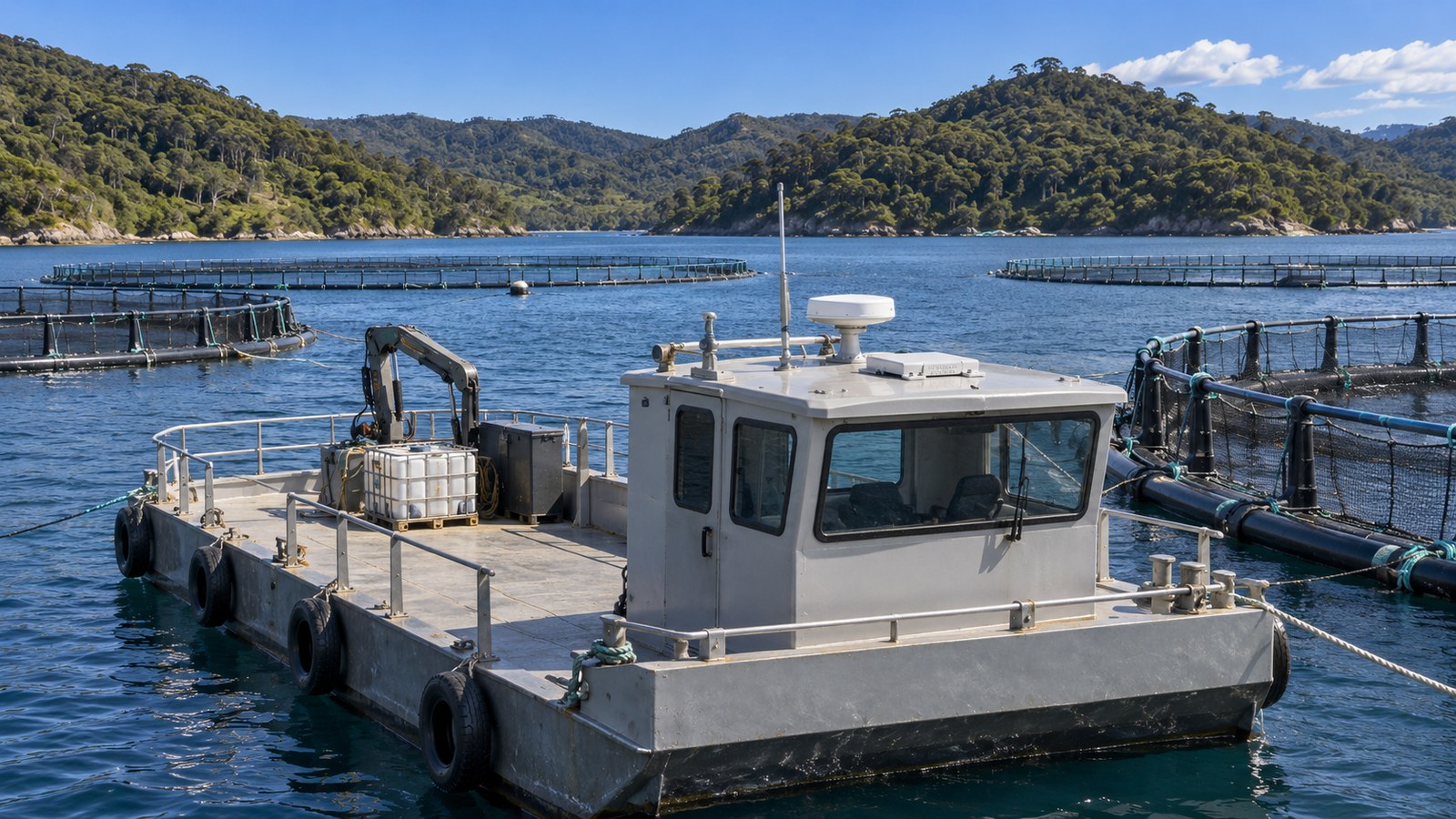
New Zealand’s marine farms sit in sheltered water from Northland to Stewart Island. Mussels are farmed in the Marlborough Sounds, Tasman and Golden Bay and the Coromandel; salmon in the Marlborough Sounds, Canterbury and Stewart Island; oysters in the Far North, Coromandel, Auckland and Marlborough. The hills and headlands that shelter a farm can also stand between the crew and the nearest cell tower.
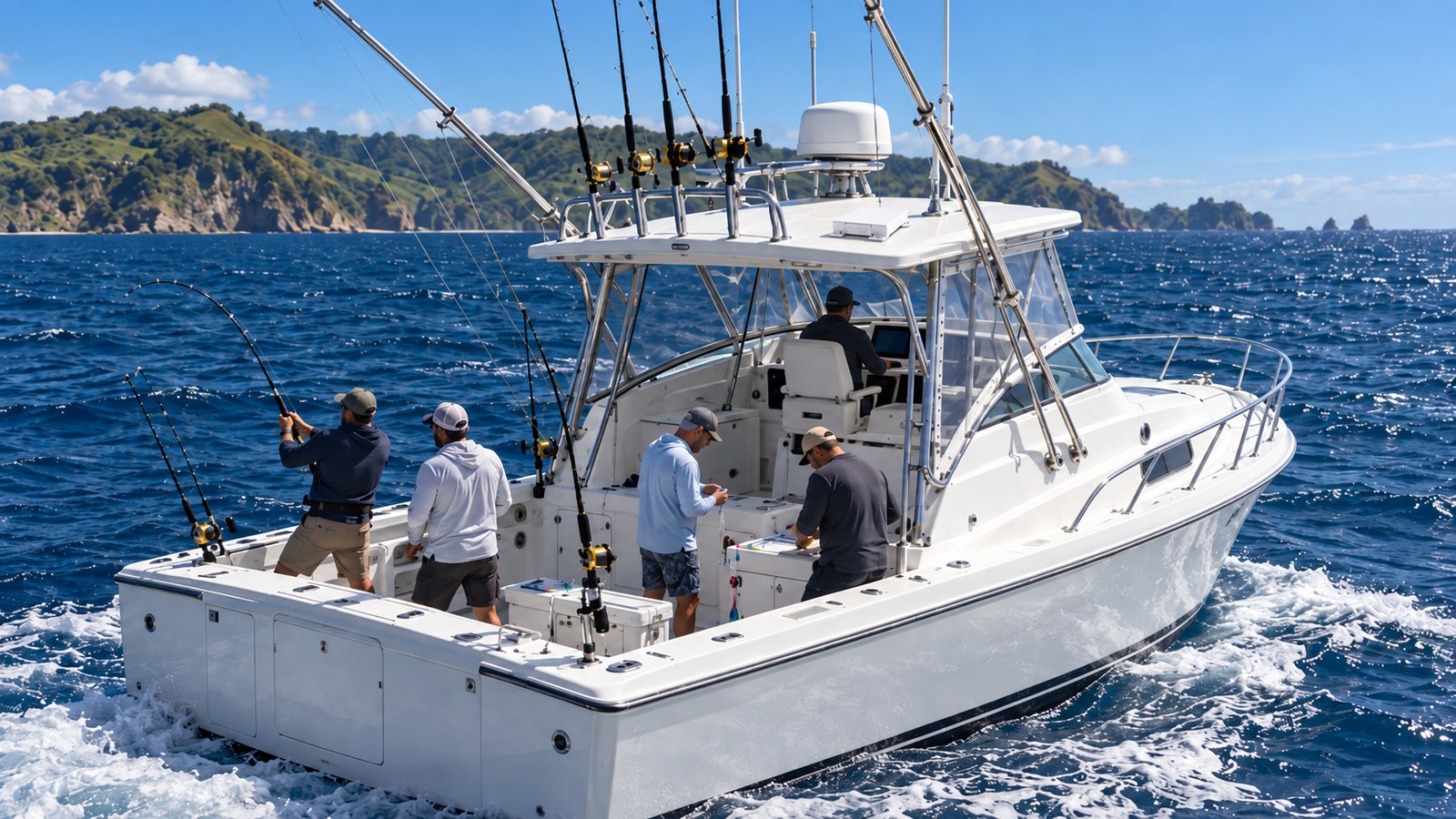
Fishing boats meet the same problem further out. All commercial fishers now report their catch and position electronically, and crews need weather updates, messaging and a way to keep in touch with home. Once a boat is past coastal mobile coverage, a satellite connection is the practical way to stay online.
Can You Use Starlink at Sea?
Starlink sets different terms for personal and commercial use on the water and has changed its marine plans several times. Check with Starlink that your plan covers commercial use in the waters you work before you rely on it. Starlink adds to your marine radio, distress beacon and other safety equipment; it does not replace them.
Recommended Configuration
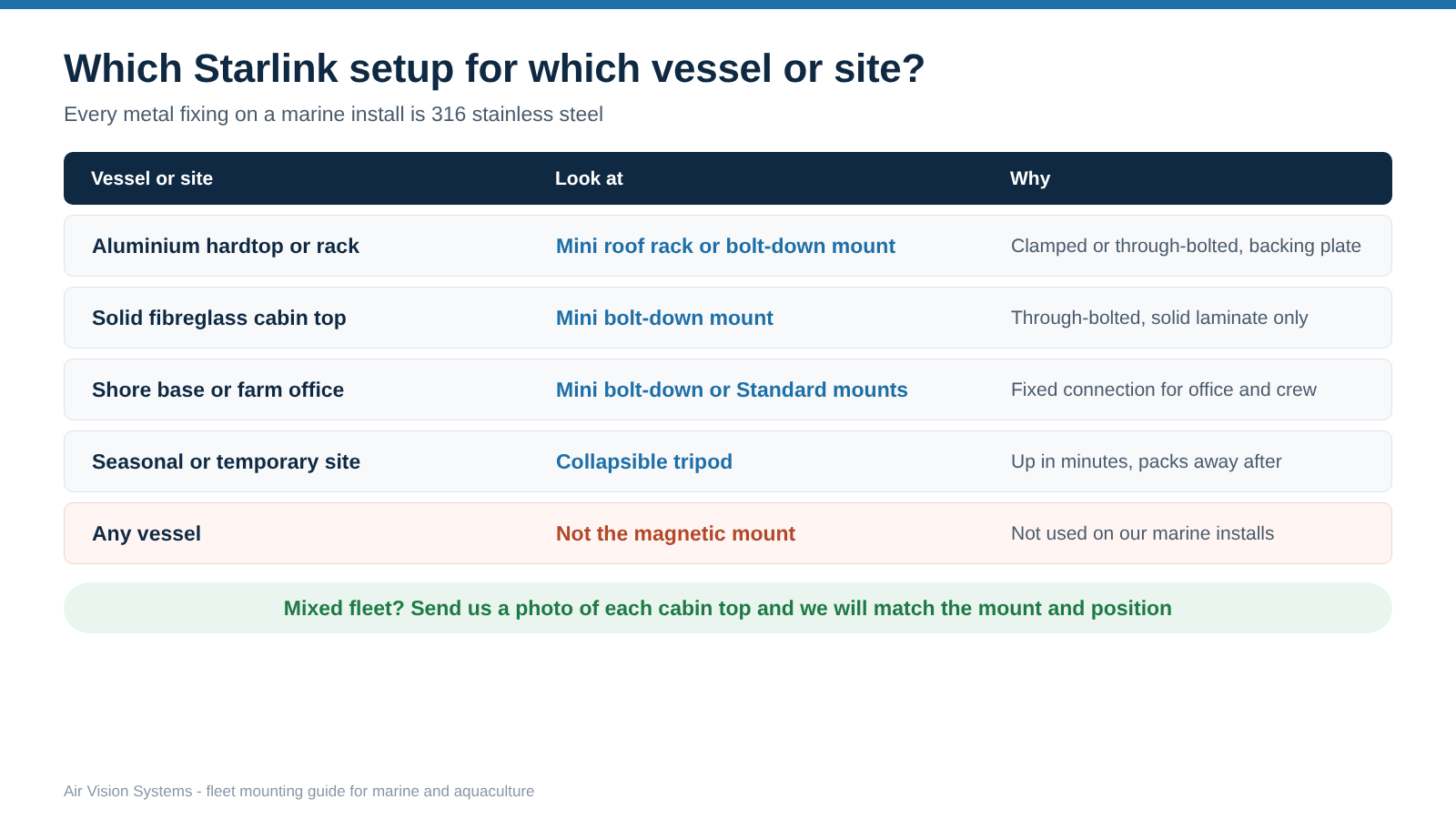
Vessel with an aluminium hardtop, cabin top or rack
Clamped or through-bolted with 316 stainless steel fixings and a backing plate. Positioned clear of the radar, aerials and lights.
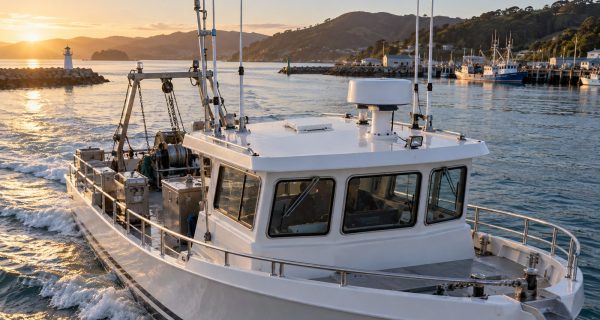
Vessel with a solid fibreglass cabin top or hardtop
Through-bolted with 316 stainless steel fixings and a backing plate. If the laminate is cored with foam or balsa, talk to us before drilling.
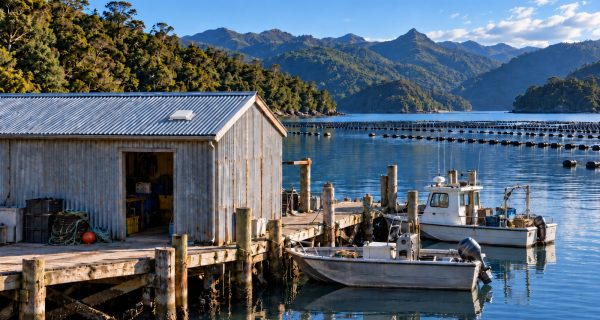
Shore base, wharf shed, processing site or farm office
A fixed connection for the office and crew, and a backup if other links fail.
Seasonal or temporary site, such as a slipway or harvest base
Up in minutes on open ground, and packs away when the job is done.
We do not use the magnetic mount on vessels. Fibreglass and aluminium give a magnet nothing to hold, and our marine installations are clamped or through-bolted only.
Power: the Starlink Mini runs from 12 to 48 V DC, so it can run from a 12 V or 24 V boat electrical system. The Standard kit runs from its own 100 to 240 V power supply, so it suits a shore base on mains or a stable generator. We supply power solutions and extension cables to suit.
Technical Specification
| Item | Figure | Basis |
|---|---|---|
| Starlink Mini dish | IP67 Type 4 (with cables installed), -30 to 50°C, 1.10 kg. Built-in Wi-Fi 5 router, up to 112 m² and 128 devices | Starlink specification sheet |
| Starlink Standard (Gen 3 / V4) dish | IP67 Type 4, -30 to 50°C, 2.9 kg. Power supply 100 to 240 V, IP66. Router: current kits ship with the Router Mini (Wi-Fi 6, up to 204 m² and 235 devices); earlier Gen 3 kits came with the larger Gen 3 router (Wi-Fi 6, up to about 297 m² and 235 devices) | Starlink specification sheet |
| Starlink Mini bolt-down mount | Wind of 252 km/h, the threshold of a Category 5 hurricane, with the mount bolted to timber, steel and concrete bases | Computer simulation (airflow and structural) |
| Roof rack mount, two-rail | Wind of 252 km/h from five directions. Highest stress in the aluminium plate 16.2 MPa against a yield strength of 193 MPa: a safety factor of 11.9, and above 9 with an extra 25% allowance for gusts | Computer simulation (airflow and structural) |
| Materials | Marine-grade 5052 aluminium plates and brackets, powder coated. Every metal fixing on a marine installation is 316 stainless steel, including the T-bolts on the roof rack mount | AVS design specification |
| Vessel installations | Underway: an independent structural assessment of the mount through-bolted to aluminium and fibreglass vessels. Results will be added here when complete | In progress |
Mount figures come from computer simulation under defined test conditions, on land-based fixings. They support the design and are not a substitute for vessel-specific, survey or regulatory certification. Figures for the Standard mounts and the tripod are not listed here; ask us about your vessels. See our engineering reports.
Installation Notes
01.
Position. Put the dish where it has the clearest view of the sky, out of the radar’s beam and clear of aerials, lights, outriggers and anything that swings overhead, such as a crane or boom. We agree the position with you at quote stage.
02.
Fixings. Every metal fixing is 316 stainless steel. Through-bolted installs use a backing plate, isolating washers and a corrosion-inhibiting compound on the threads, to protect the aluminium from galvanic corrosion.
03.
Fibreglass. Through-bolt into solid laminate. If your cabin top is cored with foam or balsa, ask us before drilling, as it needs a different approach.
04.
Cabling. Bring the cable inside through a proper sealed deck or cabin gland, and keep it clear of hatches, winches and moving gear.
05.
Power. The Starlink Mini runs from 12 to 48 V DC, so it suits both 12 V and 24 V boats. Use a fused supply; we confirm the right cable and fuse at quote stage. For long days at anchor with the engine off, plan battery capacity so the house battery is not run flat.
05.
Surveyed vessels. Talk to your surveyor or vessel builder before fitting, as you would for any new equipment on the cabin top. We supply the hardware and fitting details.
Compliance Statement
Air Vision Systems is a New Zealand-owned company, a member of the New Zealand Marine Industry Association and an approved supplier to New Zealand Police. Our mounts are designed in-house and assessed by computer simulation under defined test conditions. These assessments support the design; they are not a substitute for vessel-specific, survey or regulatory certification. An independent structural assessment for vessel installations is underway.
Fitting a mount to a commercial vessel should follow your vessel’s survey and your own safety system; your skipper or operator should confirm each installation meets your rules. Starlink is an extra layer of communication and does not replace your marine radio, distress beacon or other required safety equipment. Starlink supports the Mini in motion on eligible plans, where permitted (Starlink Help Center).
Get a Fleet Quote
Fast Response From Our NZ Team.
FAQs
Common Questions
Can you use Starlink on a fishing boat in New Zealand?
Does the magnetic mount work on a boat?
What fixings do you use on a boat?
Every metal fixing is 316 stainless steel. Through-bolted installs use a backing plate and isolating washers to protect the aluminium from corrosion.
Can I fit it to a fibreglass cabin top?
Yes, through-bolted into solid laminate with a backing plate. If the cabin top is cored with foam or balsa, ask us before drilling.
Can the Starlink Mini run from 12 V or 24 V boat power?
Yes. The Mini runs from 12 to 48 V DC, so it suits both 12 V and 24 V systems. We confirm the right cable and fuse at quote stage.
Has the mount been assessed for use on vessels?
An independent structural assessment for vessel installations is underway, and the results will be published on this page. The current figures come from computer simulation on land-based fixings.
Does Starlink replace my marine radio?
No. It is an extra path for data and calls. Your marine radio, distress beacon and other safety equipment stay as they are.
Can one order cover vessels and a shore base?
Yes. Fleet quotes commonly mix vessels and sites in one order, each with its own configuration.