
Starlink Mounting for Mining and Quarrying
Connectivity That Goes Where the Work Goes
The Problem
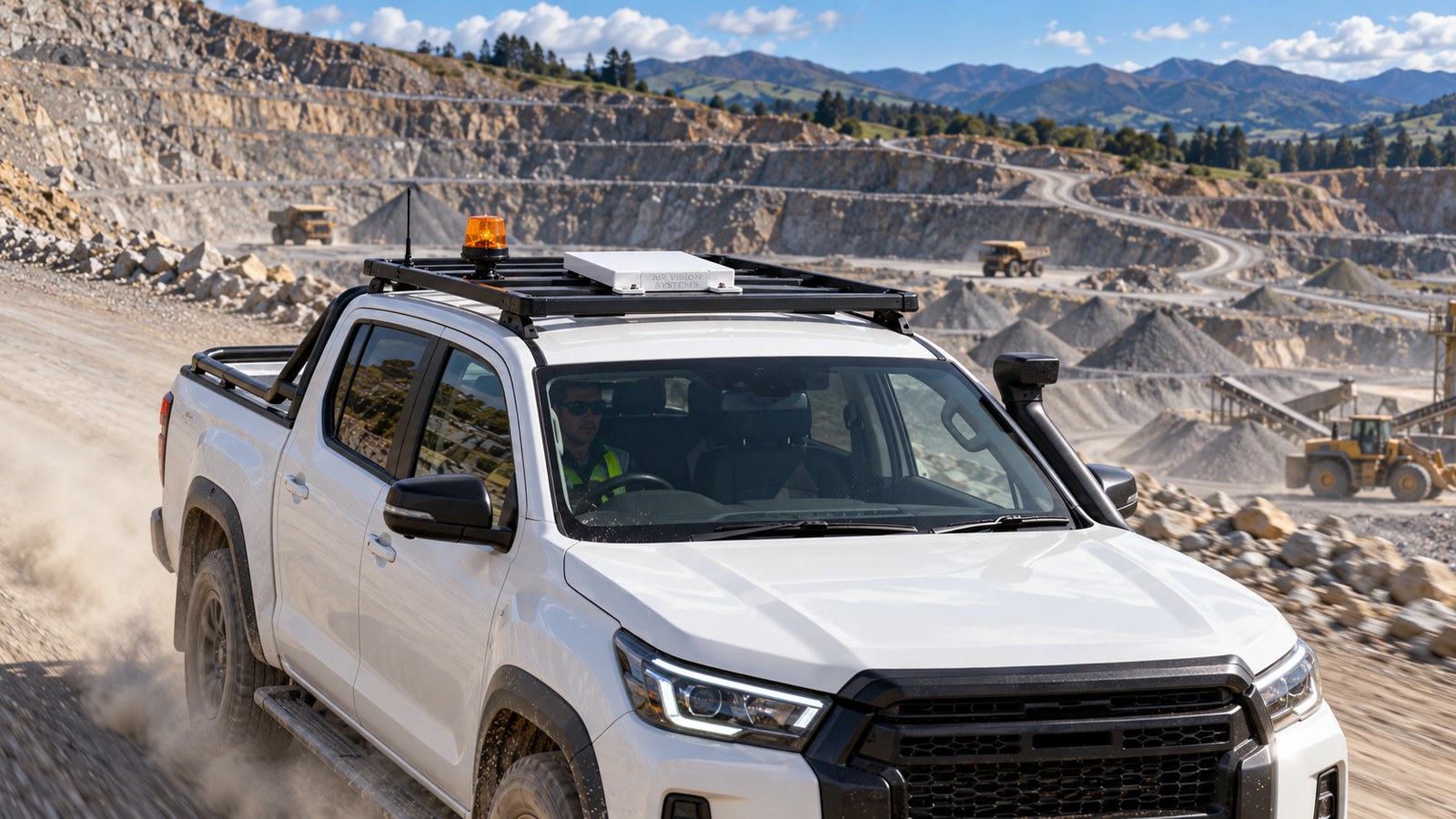
New Zealand had about 1,100 active mining and quarrying operations at the end of March 2026, most of them quarries. Many sit in rural and hill country where mobile coverage is patchy, and a pit floor can sit well below the line of sight to the nearest cell tower.
Sites still run on connected systems: weighbridge dockets, dispatch and job sheets, maps and survey files, photos for inspections, and messaging between the office and the crews. A vehicle or site office with its own satellite connection keeps those running wherever the work is. It adds to your site radio and emergency procedures; it does not replace them.
Mine and quarry vehicles also work hard. Light vehicles carry beacons, flags and aerials, run on rough unsealed roads and collect dust all day. A mount has to fit around what is already fitted and stay put.
Recommended Configuration
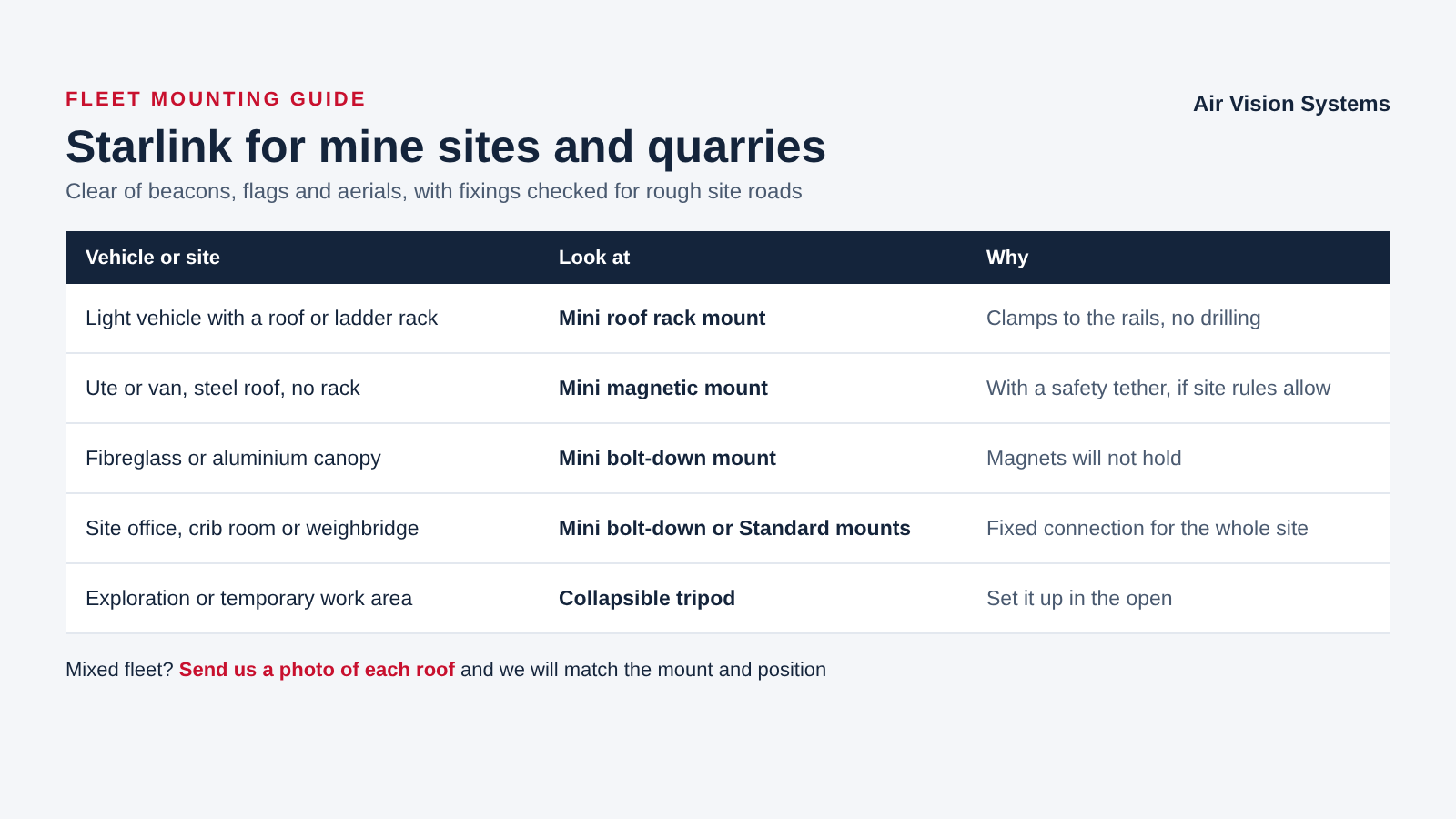
Most mine and quarry operations need more than one setup: a mount on each light vehicle that needs a connection, a fixed connection at the site office or weighbridge, and a quick setup for exploration or temporary work areas.
Clamps to the existing rails, so there is no drilling. Positioned clear of beacons, flag poles, light bars and aerials.
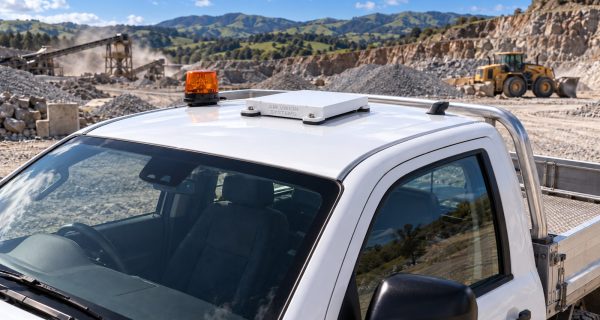
Ute or van with a steel roof, no rack
Use with eight 66 mm magnets or four 88 mm magnets, plus a safety tether. Steel roofs only. Check your site rules allow it on your vehicles.
Vehicle with a fibreglass or aluminium canopy or roof
Bolted to a fixing point your fleet manager or vehicle builder approves. Magnets will not hold on fibreglass or aluminium.
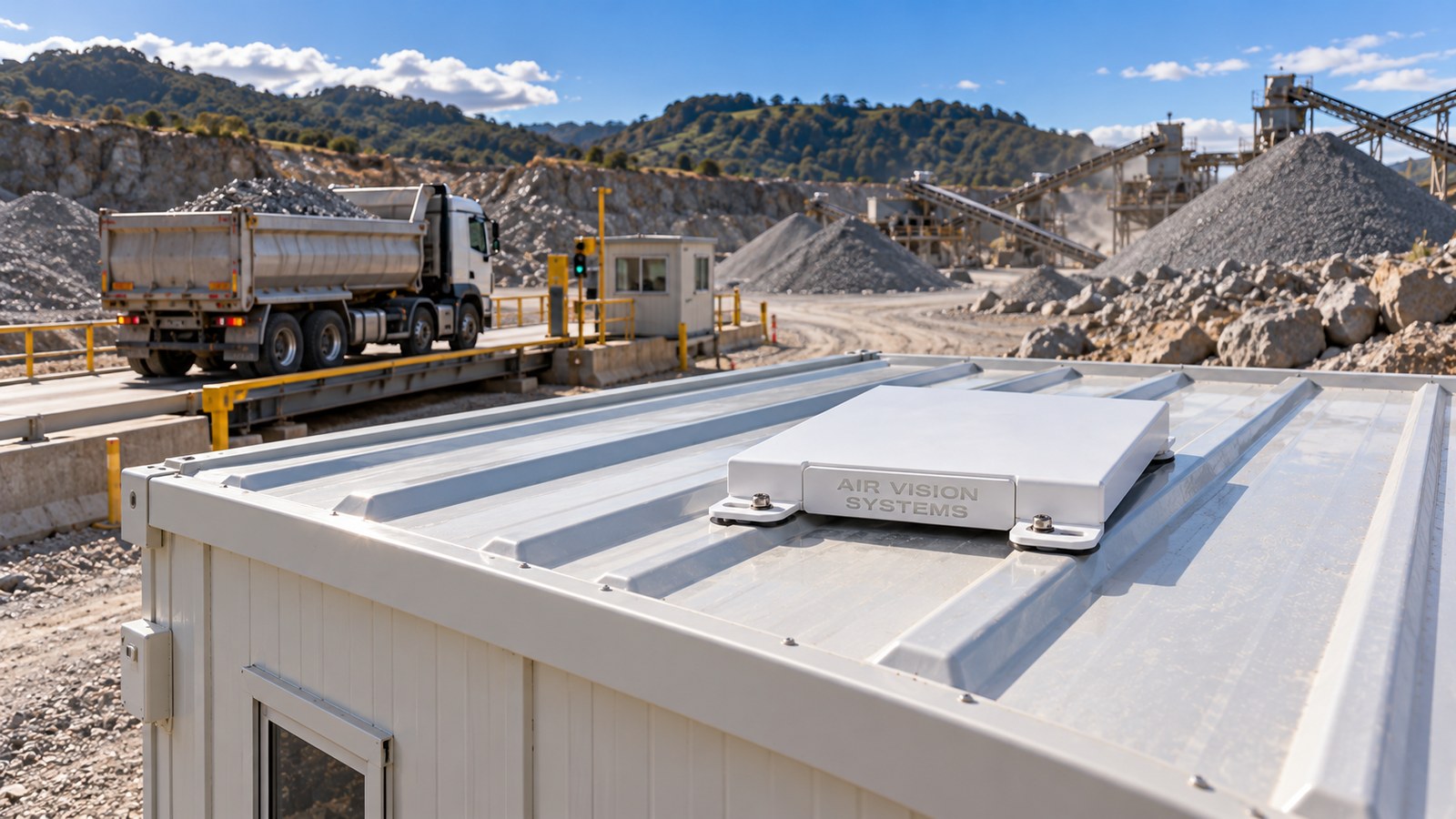
Site office, crib room or weighbridge building
A fixed connection for the office and the people working from it.
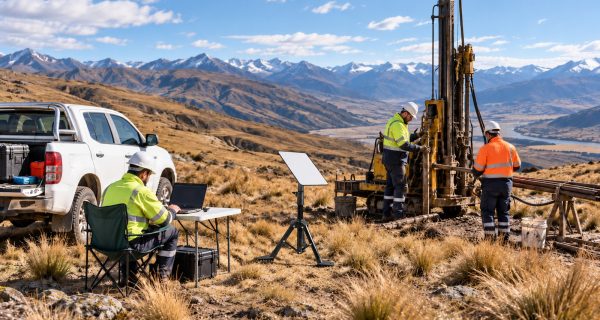
Exploration, drilling or temporary work area
Up in minutes on open ground, and packs away when the work moves on.
Power: the Starlink Mini runs from 12 to 48 V DC, so it can run from a 12 V or 24 V vehicle electrical system or a battery. The Standard kit runs from its own 100 to 240 V power supply, so it suits a site office on mains or a stable generator. We supply power solutions and extension cables to suit.
Technical Specification
| Item | Figure | Basis |
|---|---|---|
| Starlink Mini dish | IP67 Type 4 (with cables installed), -30 to 50°C, 1.10 kg. Built-in Wi-Fi 5 router, up to 112 m² and 128 devices | Starlink specification sheet |
| Starlink Standard (Gen 3 / V4) dish | IP67 Type 4, -30 to 50°C, 2.9 kg. Power supply 100 to 240 V, IP66. Router: current kits ship with the Router Mini (Wi-Fi 6, up to 204 m² and 235 devices); earlier Gen 3 kits came with the larger Gen 3 router (Wi-Fi 6, up to about 297 m² and 235 devices) | Starlink specification sheet |
| Starlink Mini bolt-down mount | Wind of 252 km/h, the threshold of a Category 5 hurricane, with the mount bolted to timber, steel and concrete bases | Computer simulation (airflow and structural) |
| Roof rack mount, two-rail | Wind of 252 km/h from five directions. Highest stress in the aluminium plate 16.2 MPa against a yield strength of 193 MPa: a safety factor of 11.9, and above 9 with an extra 25% allowance for gusts | Computer simulation (airflow and structural) |
| Materials | Marine-grade 5052 aluminium plates and brackets; stainless steel T-bolts on the roof rack mount: 316 on marine versions, 304 on inland versions | AVS design specification |
Mount figures come from computer simulation under defined test conditions. They support the design and are not a substitute for vehicle-specific, site-specific or regulatory certification. Figures for the magnetic mount, the Standard mounts and the tripod are not listed here; ask us about your vehicles. See our engineering reports.
Installation Notes
01.
Clearances. Keep the dish and its cable clear of beacons, flag poles, light bars and aerials, so nothing your site requires to be seen or heard is blocked. We agree the position with your fleet manager at quote stage.
02.
Site rules. Many sites set their own standards for light vehicle fit-outs. Have the fitting approved under your site’s rules, or carried out by your vehicle builder. We supply the hardware and fitting details.
03.
Rough roads and dust. Unsealed haul and access roads shake a vehicle all day. Check the mount fixings and the cable at each vehicle service. The Starlink Mini is rated IP67, which covers dust; keep the cable entry sealed as well.
04.
Cabling. Bring the cable into the vehicle through a proper sealed entry point and secure it clear of doors, hinges and moving parts. Follow the vehicle’s existing wiring routes where you can.
05.
Power. The Starlink Mini runs from 12 to 48 V DC, so it suits both 12 V and 24 V vehicles. Use a fused supply; we confirm the right cable and fuse at quote stage.
05.
Blasting areas. Starlink transmits radio signals. Follow your site’s rules for radio transmitters near explosives and blasting areas, the same as for your other radios.
05.
Sky view. Starlink needs open sky, so it works at the surface only, not underground. Deep pit walls, stockpiles and plant can block part of the sky; the Starlink app has an obstruction check that shows what the dish can see.
Compliance Statement
Air Vision Systems is a New Zealand-owned company and an approved supplier to New Zealand Police. Our mounts are designed in-house and assessed by computer simulation under defined test conditions. These assessments support the design; they are not a substitute for vehicle-specific, site-specific or regulatory certification.
Fitting a mount to a mine or quarry vehicle should follow your site’s vehicle and electrical standards and its rules for radio transmitters. Your site or fleet manager should confirm each installation meets your own rules. Starlink is an extra layer of communication and does not replace your site radio or emergency procedures. Starlink supports the Mini in motion on eligible plans, where permitted (Starlink Help Center).
Get a Fleet Quote
Fast Response From Our NZ Team.
FAQs