
Based on engineering analysis commissioned by Air Vision Systems | NZ, AU and Global
Starlink Mini hail protection matters more than most people realise. If you live somewhere hail is a real threat, and across New Zealand, Australia, and large parts of the world, it absolutely is, the question of whether a polycarbonate cover can genuinely protect your dish is worth answering properly.
The short answer is yes. But at Air Vision Systems, a short answer is not enough. We commissioned a Finite Element Analysis (FEA) simulation of a hailstone strike on the AVS Starlink Mini Outdoor Protective Cover to find out exactly what happens at the moment of impact, the stress waves, the deformation, the forces involved, and whether the cover holds. It does, with a factor of safety of 4.8.
Hail is the most destructive threat your Starlink Mini faces outdoors, but it is not the only one. This post covers the full picture, starting with what the engineering data actually shows, and then everything else the cover protects against that most people do not think about until it is too late.
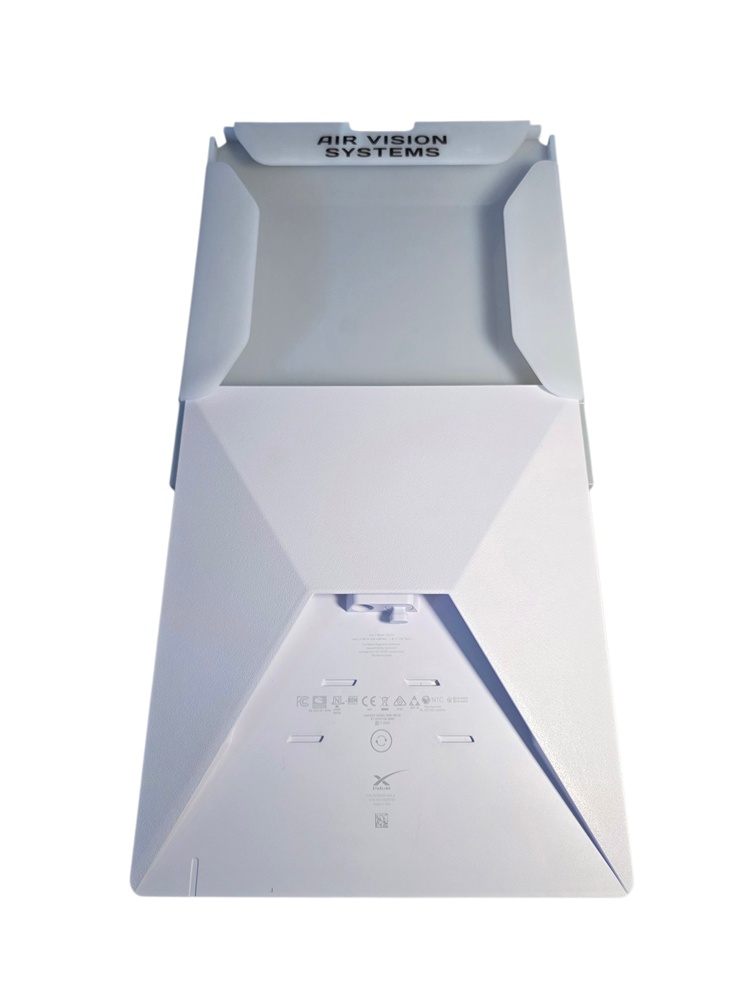
The AVS Starlink Mini Outdoor Protective Cover, press-fit design, no tools required.
Why Starlink Mini Dishes Are Vulnerable Outdoors
The Starlink Mini was designed for portability and outdoor use, but that does not mean the dish itself is built to take punishment. The face of the dish is a precision-engineered phased array antenna, a flat panel packed with electronics beneath its outer surface. It is not armoured. It is not designed to absorb impacts. It is designed to communicate with satellites at low Earth orbit, and it does that exceptionally well.
What it is not designed for is a hailstorm.
Hail damage to Starlink dishes is a well-documented real-world problem. A direct strike from a large hailstone can dent or crack the dish surface, damage the antenna elements beneath, and take the terminal offline permanently. Starlink’s warranty does not cover weather damage, which means a hail-damaged dish is a replacement cost you bear yourself.
In New Zealand and Australia, hailstorms capable of producing stones 20mm to 40mm in diameter are not unusual events. They happen across inland New South Wales, Queensland, Victoria, Canterbury, Hawke’s Bay, and many other regions where Starlink users are concentrated precisely because conventional broadband infrastructure is limited. The people most likely to need Starlink are often in the areas most exposed to this kind of weather.
A polycarbonate cover does not change what the dish is. It changes what the dish has to face, and that is the foundation of genuine Starlink Mini hail protection.
What the FEA Simulation Actually Tested
To assess whether the AVS Starlink Mini Outdoor Protective Cover could withstand a real hail impact, an Explicit Dynamic Finite Element Analysis simulation was conducted. This is the same class of engineering analysis used in aerospace, automotive, and defence applications to model high-velocity impact events that happen too fast to measure directly.
The simulation modelled a 30mm diameter hailstone, consistent with a severe hailstorm event, striking the polycarbonate cover at 30 metres per second. That is terminal velocity for a hailstone of that size, meaning the simulation represents a worst-case real-world strike rather than a conservative estimate.
The hailstone was modelled using a Crushable Foam and Equation of State formulation, which accurately replicates the way ice behaves on impact, absorbing and dissipating kinetic energy as it fractures and shatters rather than bouncing back elastically. The polycarbonate cover was modelled using Bilinear Isotropic Hardening, which accounts for potential plastic deformation if the material is pushed beyond its elastic limit. The receiver housing beneath was modelled to support the press-fit interface used in the actual product.
The mesh was refined at the impact zone to capture stress wave propagation accurately at the microsecond timescale of the collision.
The question the simulation was designed to answer was straightforward: does the cover yield, crack, or detach under a worst-case hail strike? The answer, as the data shows, is no.
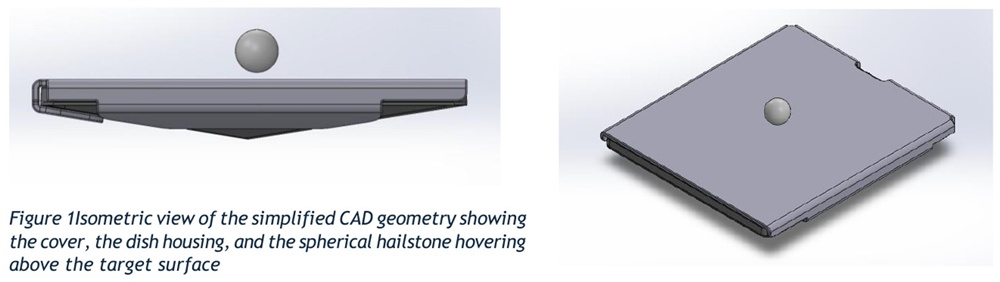
FEA simulation geometry showing the polycarbonate cover, the receiver housing, and the 30mm hailstone modelled at terminal velocity above the impact zone
What the Results Show: A Factor of Safety of 4.8
The key output from an impact simulation like this is the Equivalent von-Mises stress, the engineering metric used to determine whether a ductile material like polycarbonate will yield or deform permanently under load.
At the moment of maximum impact force, the simulation recorded a peak von-Mises stress of 11.3 MPa within the polycarbonate cover.
The tensile yield strength of the high-viscosity polycarbonate used in the AVS cover is 55 MPa. That is the point at which the material would begin to deform permanently. The peak stress recorded during the simulated hail strike was 11.3 MPa, just over one fifth of the yield threshold.
That gives a factor of safety of 4.8.
To put that in practical terms, the cover would need to experience a force nearly five times greater than a worst-case 30mm hailstone striking at terminal velocity before the polycarbonate would even begin to yield. No cracking. No permanent deformation. No failure.
The simulation also confirmed that the press-fit retention mechanism held throughout the impact. The kinetic energy transferred during the strike was insufficient to overcome the frictional holding forces of the press-fit design, meaning the cover stayed securely attached to the dish housing under dynamic loading. In a real hailstorm, the cover does not detach.
Stress waves propagated radially outward from the point of contact and dissipated without reaching a level that threatened structural integrity at any point across the cover surface.
The engineering conclusion is unambiguous: the AVS Starlink Mini Outdoor Protective Cover is genuine Starlink Mini hail protection, structurally sound under severe hail impact conditions.
This is the same rigorous approach we apply across the AVS range, including our Starlink Gen 3 wind rating testing and magnetic mount testing.
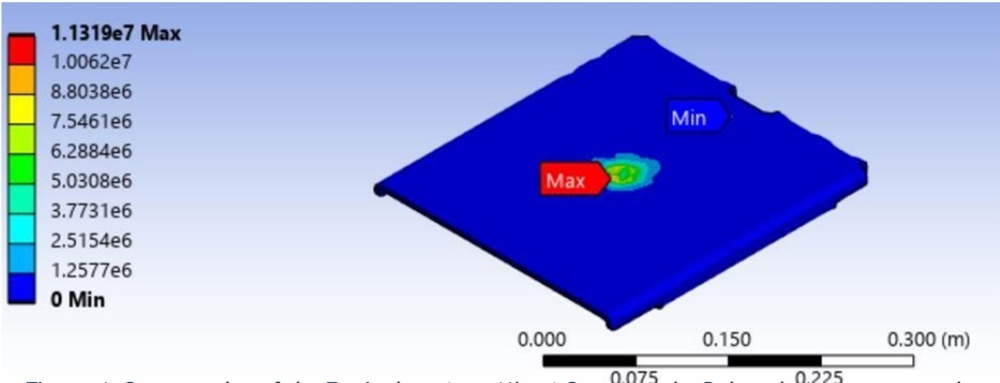
Equivalent von-Mises stress contour plot at the moment of maximum impact force. Peak stress of 11.3 MPa recorded at the impact zone, well within the elastic limits of the polycarbonate (yield strength 55 MPa).
The Engineering Behind the Claim
Most protective covers on the market are sold on the basis that polycarbonate is tough. That is true, but it is not an engineering answer. The Air Vision Systems (AVS) Starlink Mini Outdoor Protective Cover was subjected to an Explicit Dynamic Finite Element Analysis simulation, the same class of analysis used in aerospace and automotive impact testing, with a 30mm hailstone modelled at terminal velocity. The peak stress recorded was 11.3 MPa against a material yield strength of 55 MPa. That is a factor of safety of 4.8. The cover does not just claim to protect your Starlink Mini from hail. The engineering confirms it.
Why Polycarbonate and Why It Matters
Not all protective covers are equal, and the material choice is where the difference between a cover that works and one that does not comes down to physics rather than marketing.
The AVS Starlink Mini Outdoor Protective Cover is manufactured from high-viscosity polycarbonate. Polycarbonate is one of the most impact-resistant transparent engineering polymers available. It is the material used in riot shields, aircraft canopies, and safety glazing applications precisely because it combines high strength with the ability to absorb and dissipate impact energy without shattering.
The specific properties that matter for hail protection are its tensile yield strength of 55 MPa and its elastic modulus of 2200 MPa. The yield strength determines how much stress the material can absorb before it permanently deforms. The elastic modulus describes how the material behaves under load, stiff enough to resist deformation, but with enough flexibility to absorb dynamic impact energy rather than transmitting it directly to the dish surface beneath.
This behaviour is what the FEA simulation confirmed. Under a 30 m/s hailstone strike, the polycarbonate absorbed and dissipated the kinetic energy of the impact. The stress remained in the elastic range throughout. When the hailstone rebounded, the cover returned to its original geometry with no permanent deformation.
Polycarbonate is also radio-transparent. The satellite signal passes through it without meaningful attenuation, which means fitting the cover has no measurable effect on your Starlink Mini’s connection performance. You are not trading signal quality for physical protection.
UV stability is the final consideration for any outdoor cover. Polycarbonate exposed to prolonged sunlight without UV protection will yellow and become brittle over time, which would defeat the purpose entirely. The AVS cover is manufactured from UV-stabilised polycarbonate, maintaining clarity and impact performance across years of outdoor exposure. It also shields the dish itself from direct UV exposure, adding a further layer of long-term protection to the terminal beneath.
The cover is also RoHS compliant, meaning it is manufactured without restricted hazardous substances such as lead, mercury, and certain flame retardants. For installers and commercial buyers across the UK and Europe in particular, that compliance matters when specifying hardware.
No Tools, No Fuss, Fitted in Seconds
The AVS Starlink Mini Outdoor Protective Cover press-fits directly onto the dish housing. No tools, no adhesives, no drilling, and no modification to the dish itself. Fit it before a storm, remove it when you do not need it, and the FEA simulation confirms it stays attached under real impact loading.
Beyond Hail: Everything Else the Cover Protects Against
Hail is the headline threat and the one with the engineering data behind it, but it is not the only reason to fit a protective cover to your Starlink Mini.
Bird damage
Bird strikes and bird-related damage are a documented real-world problem for Starlink dishes. In rural and semi-rural areas, birds of prey and corvids in particular will investigate a dish surface, pecking at it, scratching it with their talons, and in some cases causing meaningful surface damage over time. The polycarbonate cover sits over the dish face and takes whatever a bird delivers. The dish underneath does not.
Falling branches and debris
Anyone running a Starlink Mini in a bush setting, on a rural property, or in an area with mature trees knows that falling branches, seed pods, and storm-driven debris are a constant. A direct hit from even a small branch falling from height carries enough energy to damage an unprotected dish surface. The cover absorbs and deflects these impacts before they reach the antenna.
Road and gravel debris
For Starlink Mini users running the dish on a vehicle, caravans, motorhomes, utes, and 4WDs, flying gravel and road debris is a genuine risk at speed. A stone kicked up from the road at highway speeds carries significant kinetic energy. The cover provides a sacrificial layer that protects the dish face during travel.
UV degradation
The dish housing and surface are exposed to direct sunlight whenever the system is running outdoors. Over time, unprotected UV exposure degrades plastics, causing discolouration, brittleness, and surface breakdown. The AVS cover is manufactured from UV-stabilised polycarbonate, maintaining clarity and impact performance across years of outdoor exposure. It also shields the dish itself from direct UV exposure, extending the operational life of the terminal beneath.
Accidental knocks and drops
For portable Mini users who regularly set up and pack down their system, accidental knocks during handling are inevitable. The cover stays on during transport and provides impact protection against the bumps and scrapes that come with regular use in the field.
General contamination
Bird droppings, tree sap, insect residue, and airborne grime accumulate on any outdoor surface. On an unprotected dish, aggressive cleaning of stubborn contamination risks scratching the antenna surface. With the cover fitted, the polycarbonate takes the contamination and can be cleaned without any risk to the dish itself.
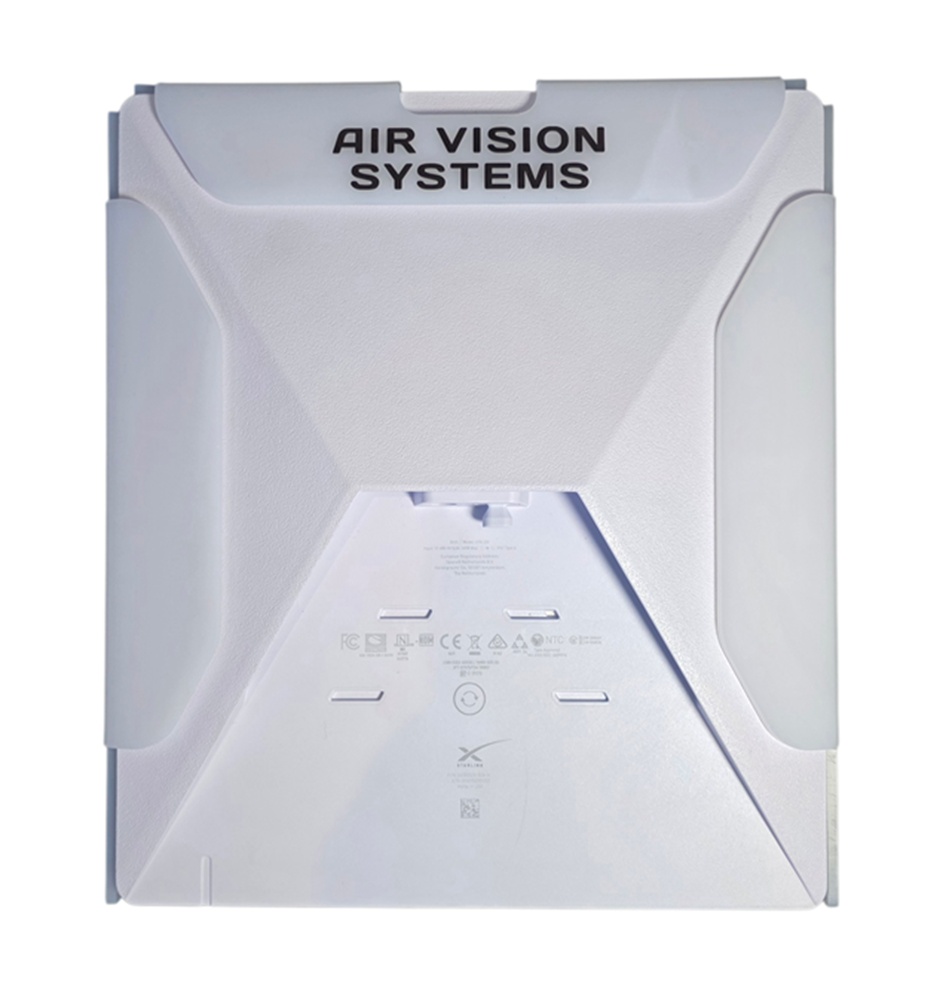
The AVS Starlink Mini Outdoor Protective Cover fitted to the dish, Air Vision Systems branding visible on the cover face.
Press-Fit Design and Installation
The AVS Starlink Mini Outdoor Protective Cover fits via a press-fit mechanism, meaning it clips directly onto the Starlink Mini dish housing without tools, adhesives, fixings, or any modification to the dish itself. Installation takes seconds.
The press-fit design was specifically included in the FEA simulation to verify that it would hold under dynamic impact loading. The simulation confirmed that the kinetic energy transferred during a 30mm hailstone strike at 30 m/s was insufficient to overcome the frictional holding forces of the press-fit interface. The cover remained securely attached to the housing throughout the simulated impact. It does not detach under hail.
In practical terms this means the cover can be fitted before a storm and removed afterwards without any tools or specialist knowledge. For portable Mini users who regularly set up and pack down, the press-fit also means the cover can be fitted during transport to protect the dish face and removed in seconds when you are ready to deploy.
The cover fits the Starlink Mini only. It is not compatible with Starlink Gen 3 or other Starlink models. If you are running a Gen 3 system, see our AVS Starlink Gen 3 Clip-In Pole Adapter for an engineered, wind-tested mounting solution.
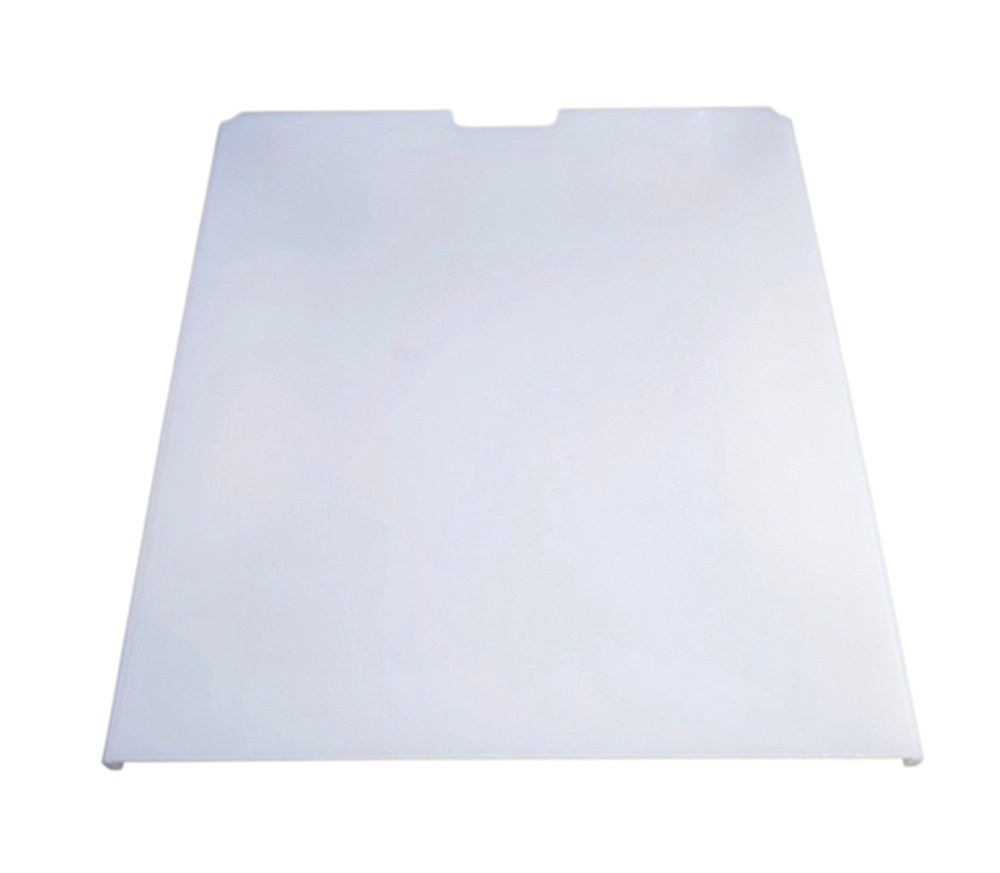
The AVS Starlink Mini Outdoor Protective Cover, UV-stabilised polycarbonate, press-fit design, no tools required.
Frequently Asked Questions
Will the cover affect my Starlink Mini signal strength or connection quality?
No. The cover is manufactured from polycarbonate, which is radio-transparent, meaning satellite signals pass through it without meaningful attenuation. Fitting the cover has no measurable effect on your Starlink Mini’s connection performance, download speeds, or signal quality. You are not trading protection for performance.
Does the cover stay on in high winds?
Yes. The press-fit retention mechanism was specifically evaluated as part of the Finite Element Analysis simulation conducted on the cover. The simulation confirmed that the frictional holding forces of the press-fit interface were sufficient to keep the cover securely attached to the dish housing under dynamic impact loading from a 30mm hailstone at 30 m/s terminal velocity. Wind loading at typical storm speeds generates significantly less force than a direct hailstone strike, so if the cover holds under the simulated impact conditions it will hold in wind.
What size hail can the cover handle?
For Starlink Mini hail protection to be meaningful, it needs to be tested against a real-world worst case. The FEA simulation modelled a 30mm diameter hailstone, a size consistent with a severe hailstorm event, striking the cover at 30 m/s terminal velocity. At that impact, the peak stress recorded in the polycarbonate was 11.3 MPa against a yield strength of 55 MPa, giving a factor of safety of 4.8. That margin means the cover has substantial capacity beyond the tested conditions. For context, 30mm hail is classified as severe by meteorological standards in both New Zealand and Australia. The vast majority of hail events produce stones significantly smaller than this.
Does fitting the cover void my Starlink warranty?
The cover is a press-fit accessory that attaches to the outside of the dish housing without any modification, adhesive, or drilling. It does not alter the terminal in any way and can be removed in seconds leaving no trace. Air Vision Systems (AVS) is not aware of any basis on which fitting a non-invasive external cover of this kind would affect a Starlink warranty, but if you have specific concerns about your warranty situation you should confirm directly with Starlink support before fitting any third-party accessory.
What the Engineering Tells Us
Hail is not a theoretical risk for Starlink Mini owners in New Zealand, Australia, and many other parts of the world where Starlink is filling the gaps left by conventional broadband infrastructure. It is a real and recurring threat to an expensive piece of equipment that your connectivity depends on, and one that Starlink’s own warranty does not cover.
The Air Vision Systems (AVS) Starlink Mini Outdoor Protective Cover was not designed on the assumption that polycarbonate is tough and that should be enough. It was subjected to an Explicit Dynamic Finite Element Analysis simulation with a worst-case hail impact to find out exactly what the engineering says. The engineering says a factor of safety of 4.8. No yielding. No permanent deformation. No detachment.
Beyond hail, the cover protects against bird damage, falling branches and debris, road and gravel strikes for vehicle users, UV degradation, accidental knocks during handling, and general contamination, all without affecting signal quality and all without a single tool or fixing required.
For the cost of a protective cover, you are insuring a terminal that costs significantly more to replace. The press-fit takes seconds. The engineering took considerably longer, and it is the reason you can fit this cover with confidence rather than hope.
Protect your Starlink Mini before the next storm
The AVS Starlink Mini Outdoor Protective Cover is FEA impact-tested to a factor of safety of 4.8, UV-stabilised for long-term outdoor use, and RoHS compliant. Beyond hail, it protects against birds, falling debris, road grime, and everyday knocks, all without affecting your signal.
View the AVS Starlink Mini Outdoor Protective Cover or our Camping Bundle including the AVS Starlink Mini Outdoor Protective Cover